Referee Assignment Patterns and Foul Frequency Correlations in Professional Hockey Wagering Markets
Yves Wolf · Jul 31, 2026
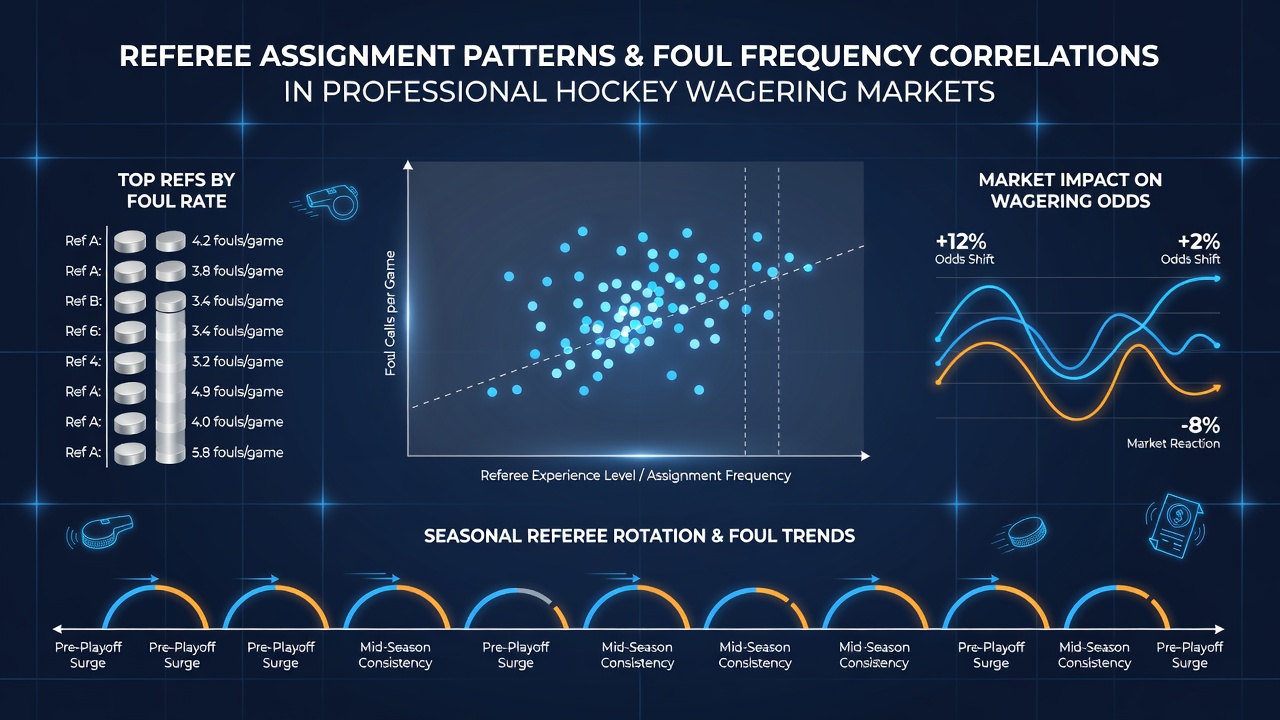
Referee Assignment Patterns and Foul Frequency Correlations in Professional Hockey Wagering Markets
Referee assignments in professional hockey follow structured rotation systems managed by league officials, and these patterns show measurable links to penalty call volumes across games. Data from the National Hockey League indicates that certain referees average higher penalty minutes per game while others maintain lower totals, creating predictable variables for markets focused on total penalties and related prop bets. Observers note that assignments often rotate based on crew chief seniority, travel schedules, and recent performance reviews, factors that shape the distribution of officials across teams and venues each season.
Assignment Rotation Systems in the League
League schedulers balance workloads by distributing high-profile crews across divisions, and this process produces identifiable clusters where specific referees handle multiple games involving the same franchises within short windows. Studies from league tracking systems reveal that officials with backgrounds in high-contact divisions tend to receive assignments in physically demanding matchups, whereas those with stricter historical call rates often cover games projected to draw larger audiences. Those who've analyzed assignment logs over multiple seasons find that travel considerations and rest periods influence selections, particularly during back-to-back series when crews move between cities.
Observed Correlations with Penalty Frequencies
Statistical reviews of game data demonstrate that foul frequency rises or falls depending on the referee crew assigned, with some officials posting consistent averages above 12 penalties per contest while others stay below eight. Researchers examining five-year datasets have identified correlations between referee experience levels and call rates in overtime periods, where tighter enforcement patterns appear more frequently. What's interesting is how these patterns hold across home and away games, although venue-specific factors like ice conditions can amplify or dampen the effect in individual matchups.
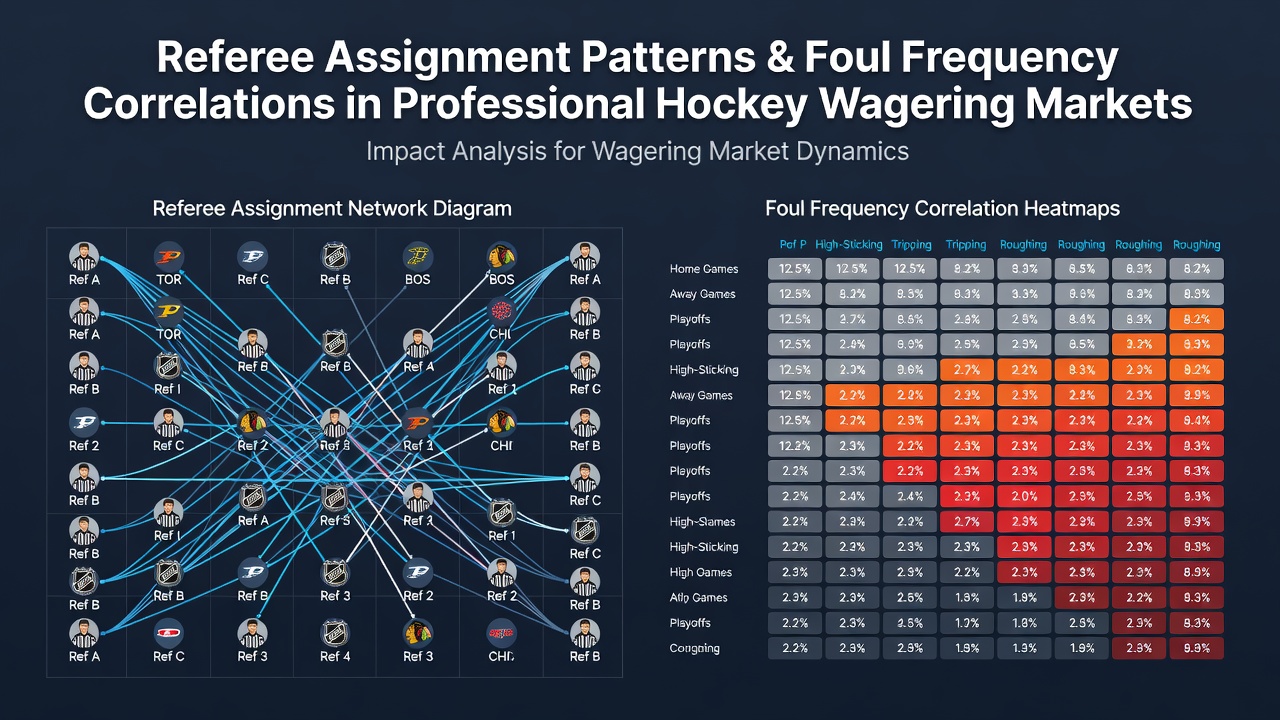
Analyses of regular season versus playoff assignments further highlight shifts, because postseason crews often include referees with lower regular-season penalty averages who receive elevated scrutiny from league supervisors. Data shows that certain pairings of linesmen and referees produce elevated minor penalty totals for obstruction infractions, whereas other combinations lean toward fewer calls on similar plays. Those monitoring these trends across conferences report that divisional rivalries sometimes coincide with higher foul outputs when particular crews are on the ice.
Implications for Wagering Markets
Betting platforms incorporate referee-specific historical data into odds calculations for total penalty markets, and sharp bettors track assignment announcements to adjust positions before lines move. Figures from industry reports indicate that markets tied to individual referee tendencies see increased volume on nights when known high-call officials receive featured games. External data from sources such as the NHL statistics portal supports these observations by providing granular breakdowns that align with betting market adjustments.
Market makers adjust over/under thresholds based on crew combinations, and historical models demonstrate that certain referee trios correlate with elevated power-play opportunities across multiple seasons. Observers tracking wagering patterns note that late-season assignments, when playoff positioning is at stake, sometimes deviate from regular patterns as supervisors prioritize experienced crews for critical contests. This creates windows where penalty totals diverge from season-long averages in measurable ways.
Data Tracking and Seasonal Variations
Advanced tracking systems now log every call with timestamps and context, allowing analysts to build referee profiles that update after each game. In July 2026, preparations for the upcoming campaign include reviews of these profiles to refine assignment algorithms ahead of training camps. Evidence from prior seasons suggests that fatigue from extended travel during January and February affects call consistency for some officials, producing measurable dips in penalty volume that appear in aggregated datasets.
Cross-referencing with team statistics reveals additional layers, because squads with aggressive forechecking styles encounter different call distributions depending on the referee. Research from academic groups studying sports officiating, including work published through Canadian university programs, has examined how these interactions play out over full schedules. Such studies supply context for how assignment patterns influence not only foul counts but also related metrics like penalty kill efficiency in live betting environments.
Conclusion
Patterns in referee assignments continue to intersect with foul frequency data in ways that shape professional hockey wagering markets. League records and statistical models provide the foundation for understanding these connections, while ongoing tracking ensures that seasonal shifts remain documented and accessible for analysis.