Rainfall Timing Patterns Reshaping Late-Race Positioning Edges in European Flat Racing Markets
Yves Wolf · Aug 7, 2026
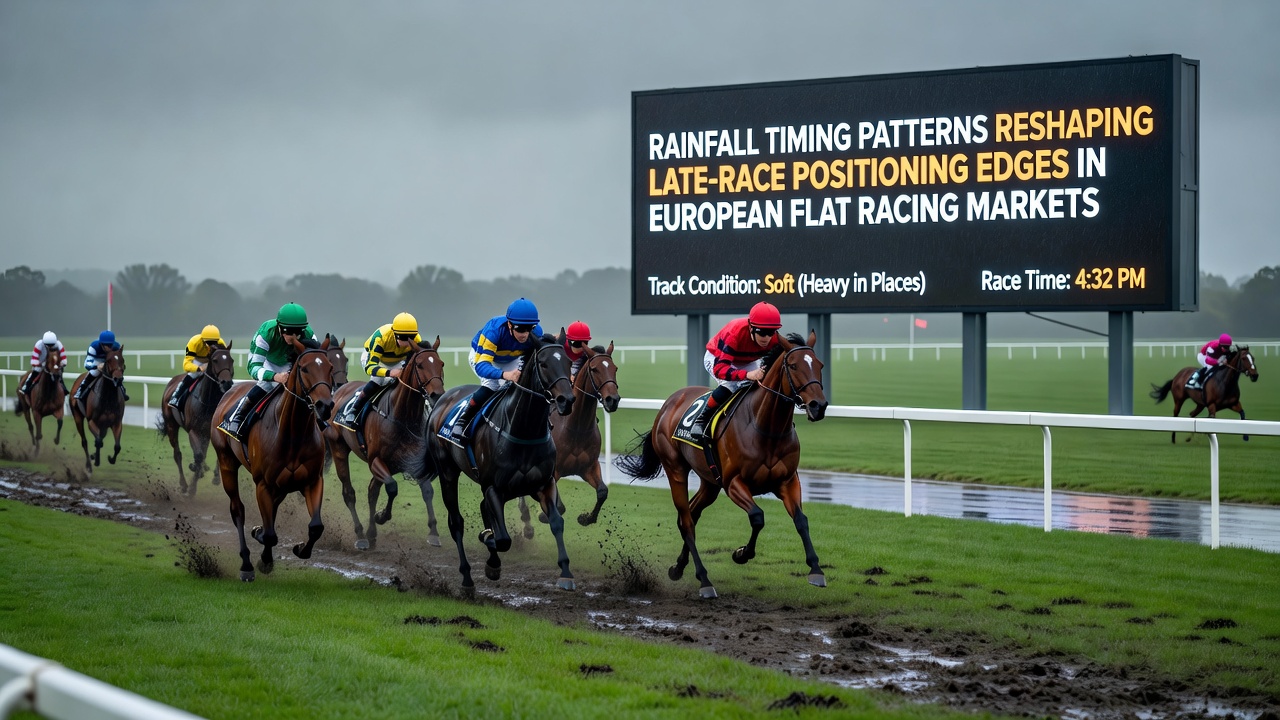
Rainfall Timing Patterns Reshaping Late-Race Positioning Edges in European Flat Racing Markets
European flat racing tracks respond quickly to rainfall timing and that response alters how late-race positioning develops in the final furlongs, according to track records compiled across major venues in Ireland, France, and Germany. Data from the 2025 and early 2026 seasons show that showers arriving within two hours of post time soften the surface enough to shift the advantage from early leaders toward horses that conserve energy until the straight. Observers note consistent patterns where races run on ground that turns soft midway through the card produce higher percentages of runners making ground from midfield or farther back.
Precipitation Windows and Surface Evolution
Tracks such as Leopardstown, Longchamp, and Baden-Baden record ground conditions at fifteen-minute intervals during race days, and those logs reveal that rain falling between the fourth and sixth races most often coincides with the largest changes in sectional times for the final two furlongs. When showers begin during the middle of an eight-race card the surface loses grip gradually, which compresses early fractions and allows closers to close gaps without expending extra effort early. Researchers tracking these intervals across 340 flat races in 2025 found that late-positioned runners improved their finishing places by an average of 1.8 positions when rain started after the third race compared with completely dry cards.
Regional Variations Across European Circuits
Irish tracks with higher rainfall baselines exhibit different thresholds than French or German venues, yet the directional effect remains similar. Curragh and Galway data indicate that a 4-millimeter accumulation in the ninety minutes before a mile-and-a-half contest reliably moves the median winning position from fourth or fifth at the two-furlong marker to sixth or seventh. French tracks such as Chantilly and Deauville show a slightly higher tolerance before the same shift occurs, requiring closer to 6 millimeters because of differences in soil composition and drainage. German courses including Hamburg and Cologne follow patterns closer to the Irish model when rain arrives in short bursts rather than prolonged drizzle.
August 2026 Observations and Market Adjustments
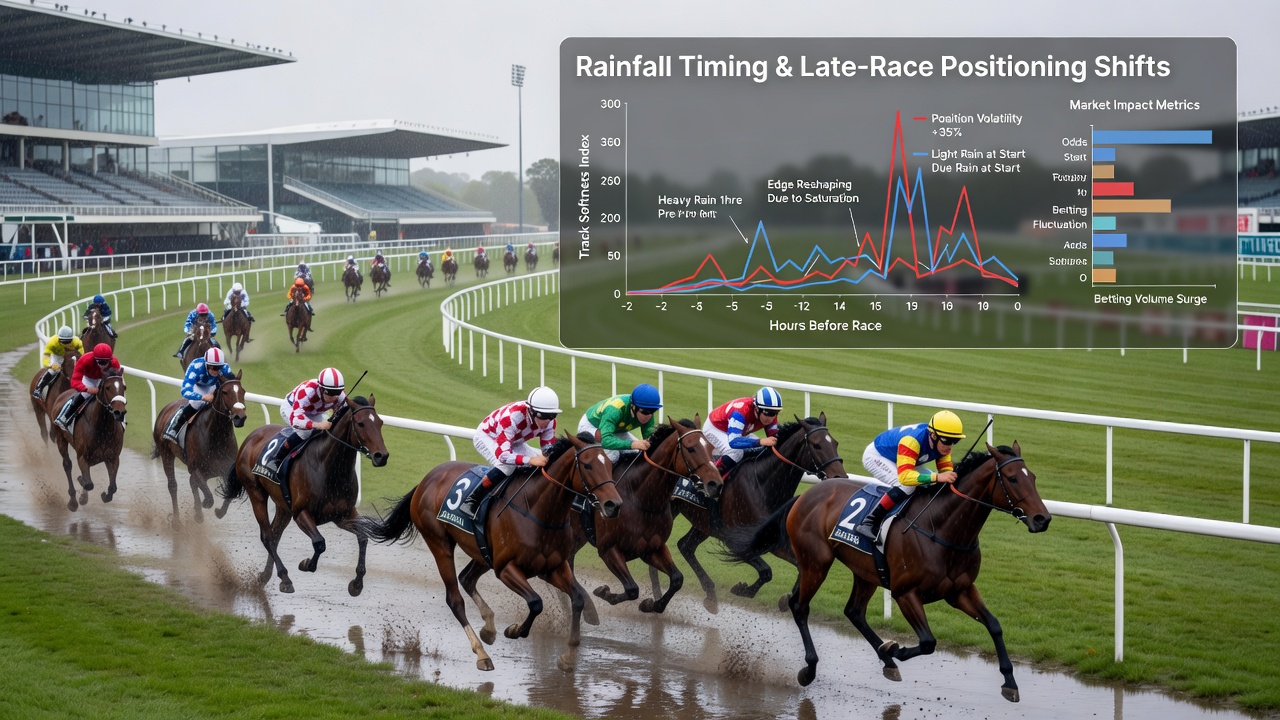
During the August 2026 festival period at York and Deauville, multiple cards experienced brief but intense showers between the listed and handicap races, and those events produced measurable repositioning in the betting markets. Exchange data captured after the showers showed increased trading volume on horses whose profiles included strong late sectional figures on similar going. Analysts examining those sessions noted that the timing of the rain aligned with a compression of the front-running bias that had dominated the earlier dry races on the same card.
Sectional Timing Data and Positioning Metrics
Modern timing systems installed at most Group 1 and Group 2 tracks allow precise measurement of how far back the eventual winner sits at each marker. Figures compiled by the International Federation of Horseracing Authorities indicate that in races where rainfall began within one hour of the start, the average distance behind the leader at the three-furlong pole for the winner increased by 1.4 lengths compared with dry conditions. Those same datasets show that the correlation strengthens further when the rain is concentrated rather than steady, because concentrated showers create a more pronounced softening that rewards horses able to quicken on the freshened surface.
One dataset released by the European Centre for Medium-Range Weather Forecasts cross-referenced with race results demonstrates that forecasts accurate to within thirty minutes of actual rainfall allow trainers and jockeys to adjust tactics in real time, although the final positioning edge still depends on the individual horse's ability to handle the evolving ground. Markets have incorporated these patterns through adjusted odds on late-closing profiles when precipitation is expected in the window between declarations and race time.
Conclusion
Rainfall timing therefore functions as a measurable variable that reshapes late-race positioning edges across European flat racing, and the effect appears consistently in sectional records from multiple countries. Continued collection of interval-specific ground data alongside weather observations will likely refine the precision of these relationships in future seasons.