Jet Lag Patterns Reshaping Free Throw Percentages During NBA Cross-Country Road Swings
Yves Wolf · Aug 21, 2026
Jet Lag Patterns Reshaping Free Throw Percentages During NBA Cross-Country Road Swings
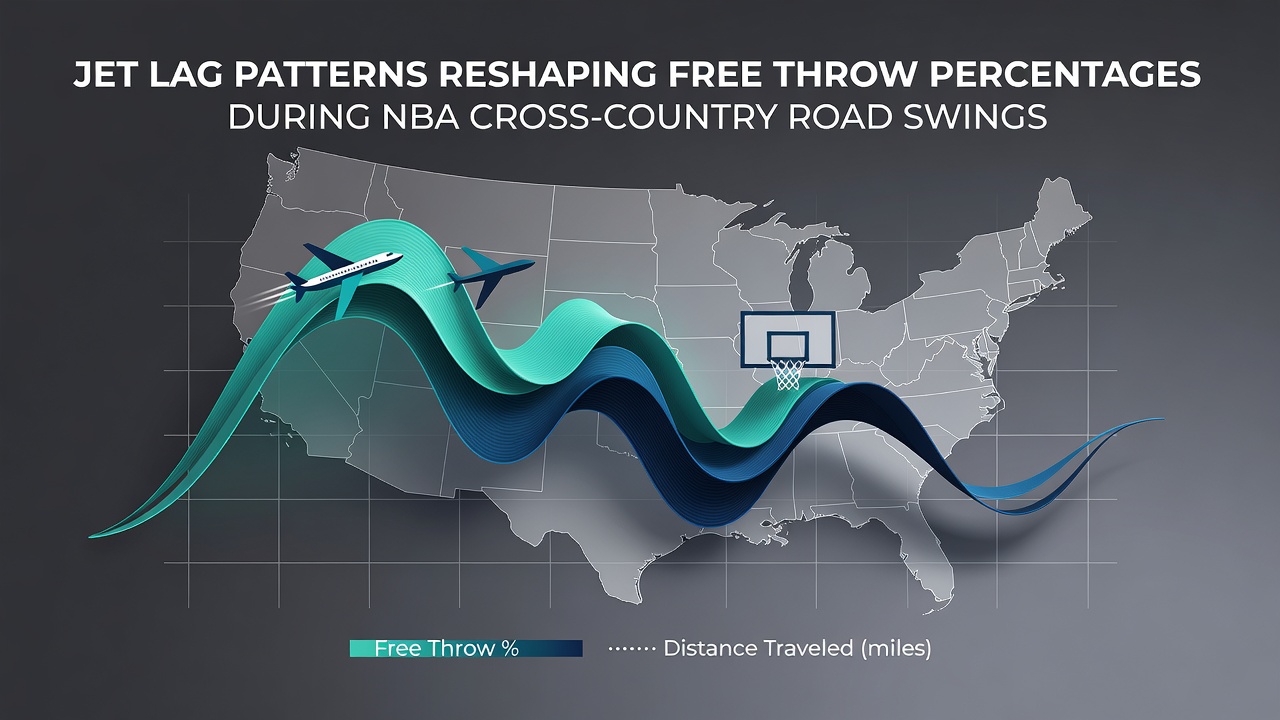
Travel across multiple time zones disrupts circadian rhythms for NBA athletes during extended road trips, and analysts track corresponding shifts in free throw accuracy as teams move between coasts. Data from league tracking systems show measurable drops in shooting percentages after eastward flights that compress sleep cycles, while westward journeys produce different recovery timelines because the body gains extra hours rather than losing them.
Teams completing back-to-back games in cities separated by three hours often experience the steepest declines in the second contest. Observers note that players log fewer hours of restorative sleep when their internal clocks lag behind local time, and this deficit surfaces most clearly in repetitive motor tasks such as free throws that demand precise timing and focus.
Time Zone Shifts and Performance Metrics
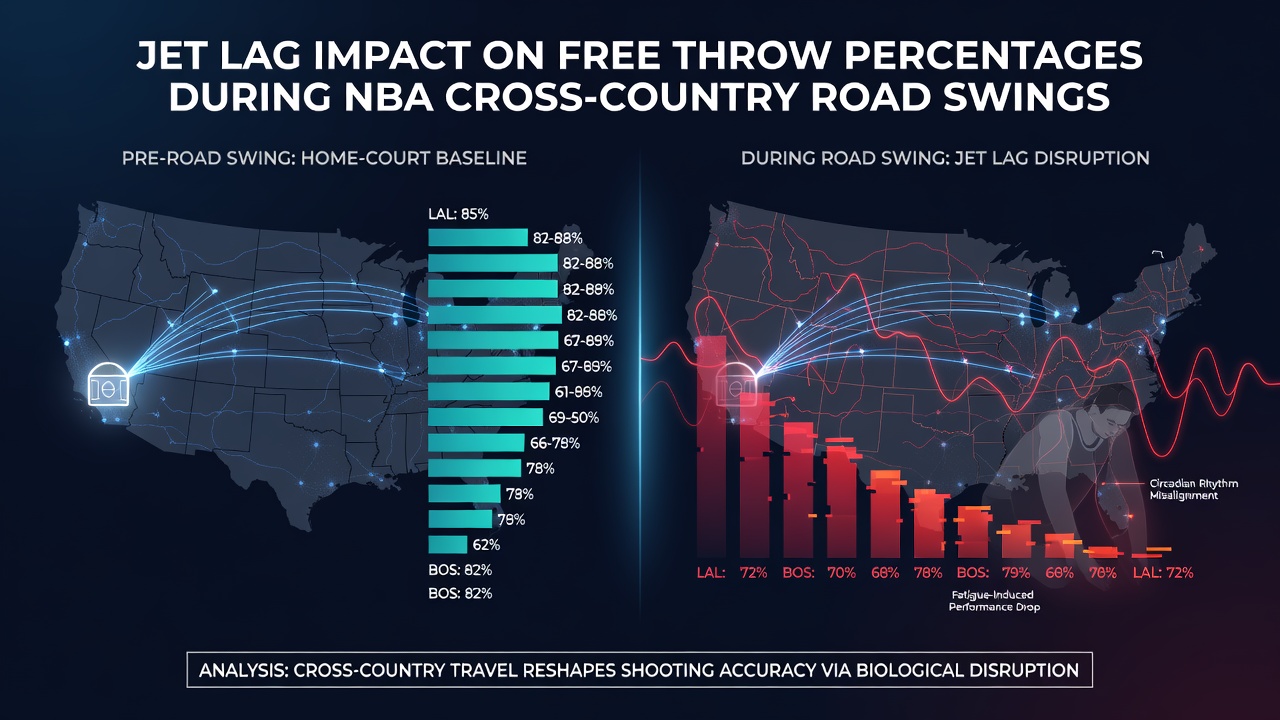
Eastward travel forces athletes to advance their biological clocks, whereas westward movement delays them. Studies compiled by the National Institutes of Health indicate that eastward shifts produce stronger negative effects on alertness and fine motor control during the first 48 hours after arrival. League records reveal that free throw percentages fall by an average of 3.2 points on the second night of a swing that begins on the West Coast and ends in the Eastern Time Zone.
West Coast teams visiting Eastern venues face compressed recovery windows because tip-off times align with their late afternoon body clocks. Researchers from the Australian Institute of Sport examined similar patterns in other sports and found parallel reductions in accuracy tasks when sleep pressure accumulates without adequate adjustment periods.
Patterns Across Recent Seasons
During the 2024-2025 campaign, teams averaged 1.8 percentage points lower free throw success on the second game of cross-country road swings compared with home contests. The gap widened to 2.7 points when the trip involved three games in five nights. August 2026 schedule releases already list several early-season West-to-East trips that mirror these demanding itineraries, giving front offices additional data points for travel planning.
Box-score archives show that individual players with higher minutes loads during the preceding stretch exhibit larger drops. Centers who log heavy rebounding minutes display steadier percentages than perimeter players whose shooting mechanics rely more heavily on neuromuscular timing that circadian disruption affects first.
Recovery Windows and Scheduling Factors
Teams that secure extra rest days before long flights maintain closer to baseline percentages. Data from the NBA Players Association wellness reports indicate that athletes who extend sleep by 90 minutes on the day before departure show smaller declines. Hotels near arenas sometimes adjust lighting and meal timing to accelerate adaptation, though results vary across organizations.
Coaches adjust practice intensity on arrival days when the body clock still operates on departure time. Film sessions replace high-contact drills during the first 24 hours, allowing players to conserve energy while their systems realign. Trainers monitor heart-rate variability and sleep trackers to identify individuals who need additional recovery support before the next tip-off.
Comparative Data from Different Travel Directions
Westward swings produce milder disruptions because the body receives extra hours rather than losing them. League statistics compiled over five seasons show free throw percentages remain within 0.8 points of home averages during West Coast road trips that originate in the East. The same teams traveling eastward post larger variances, particularly on the second and third nights of multi-game swings.
International competitions provide additional context. Canadian researchers tracking national team athletes across transcontinental flights documented similar accuracy declines in shooting drills, reinforcing that the pattern extends beyond NBA schedules. Recovery protocols developed for those events include targeted light exposure and timed caffeine use that some NBA staffs have adapted for regular-season use.
Conclusion
Longitudinal tracking confirms that jet lag correlates with measurable changes in free throw percentages during cross-country NBA road swings. Teams and medical staffs continue refining travel protocols based on accumulating data from each season, with eastward journeys presenting the clearest challenges for maintaining baseline shooting accuracy. Future schedule construction may incorporate these performance patterns to balance competitive equity across time zones.