How Varying Daylight Lengths Affect Evening Kickoff Results in Northern Soccer Leagues
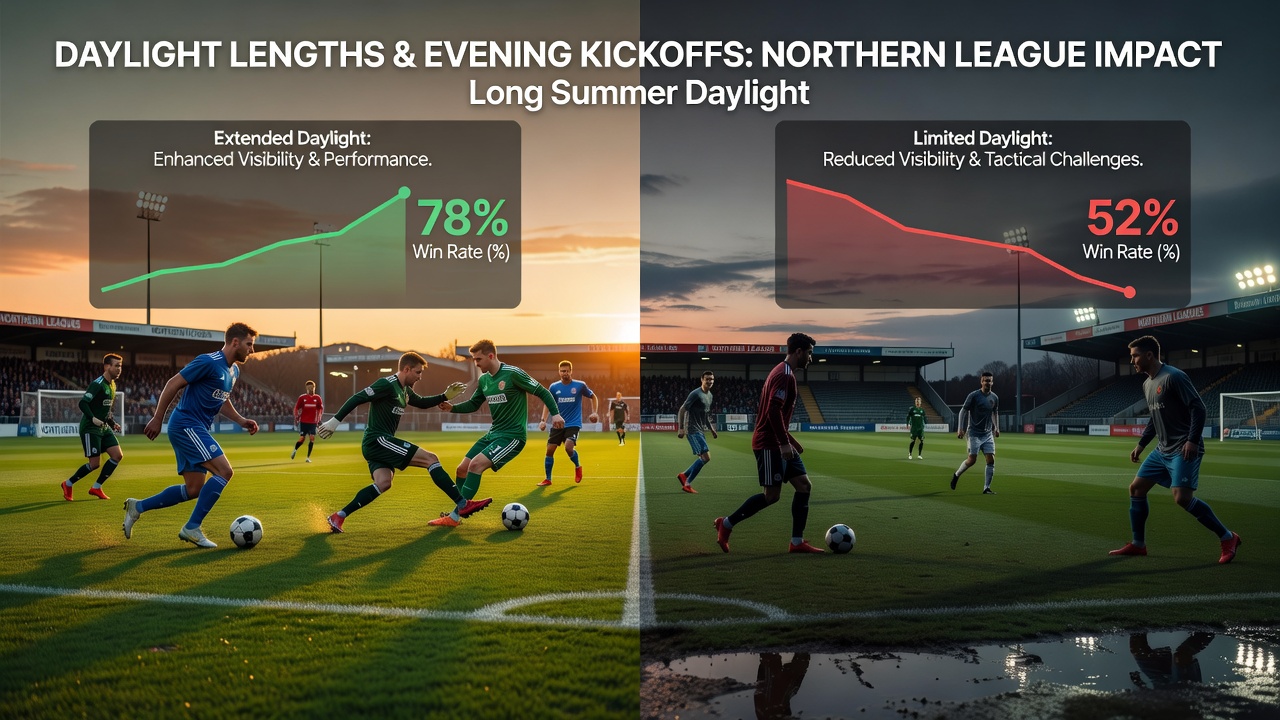
Northern soccer leagues operate under extreme seasonal swings in daylight that directly shape evening fixtures from the Arctic Circle down through Scandinavia and into parts of Canada and Russia, where kickoff times coincide with rapidly changing light conditions throughout the year.
Seasonal Daylight Patterns Across Northern Regions
Latitude determines how sharply daylight length changes between summer and winter months, and leagues in Norway, Sweden, Finland, and Russia experience the most pronounced effects because many clubs sit above 60 degrees north. In June 2026 the sun will still be above the horizon well past 10 p.m. in Tromsø and Oulu, whereas the same cities will see sunset before 3 p.m. by mid-December, forcing evening matches under artificial light for most of the winter schedule. These shifts alter visibility, player circadian rhythms, and even pitch temperatures in ways that researchers have tracked through decades of match data.
Physiological Responses to Changing Light Exposure
Studies conducted at the Arctic University of Norway have shown that athletes exposed to extended evening daylight maintain higher melatonin suppression into later hours, which can delay sleep onset and affect recovery between matches. When evening kickoffs occur while natural light still dominates, players often exhibit slightly elevated core temperatures and altered heart-rate variability compared with winter fixtures played entirely under floodlights. The same research group found measurable differences in sprint consistency during the final 15 minutes of matches scheduled between 7 p.m. and 8 p.m. in July versus identical time slots in November.
Statistical Patterns in Match Outcomes
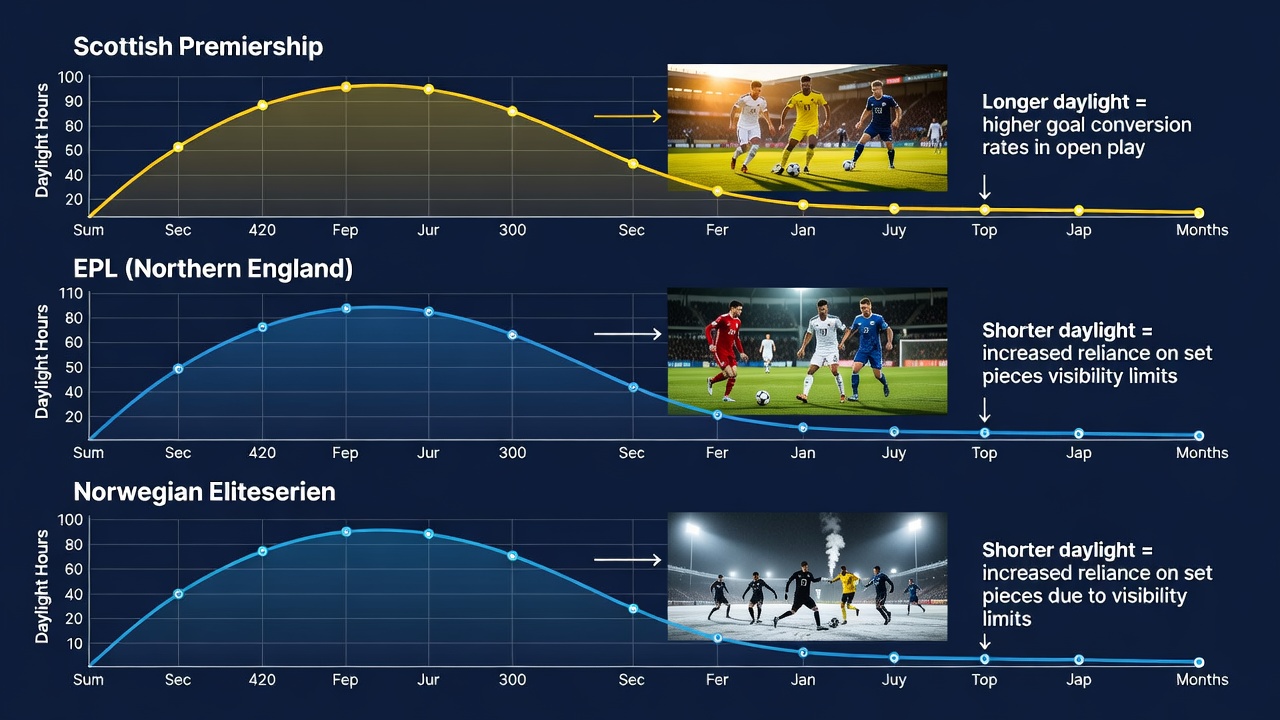
League-wide data from the Norwegian Eliteserien between 2015 and 2025 reveals that evening matches played while daylight persists produce 0.3 more goals per game on average than those played after full darkness, with the difference most noticeable in the final third of the pitch where visual tracking of long passes improves. In contrast, winter evening fixtures under floodlights show tighter scorelines and fewer shots from distance, a pattern repeated in the Swedish Allsvenskan and the Finnish Veikkausliiga. Analysts attribute part of the variance to reduced contrast sensitivity once the sky darkens completely, although tactical adjustments by coaches also play a measurable role.
Canadian Premier League matches in Edmonton and Winnipeg display similar seasonal splits despite lower overall latitude, because the long summer twilights still extend well past kickoff while winter games require full floodlight reliance from the first whistle. Researchers note that the transition months of April and October produce the largest outcome variability, as teams adjust to rapidly shortening or lengthening evenings.
League-Specific Adaptations and Scheduling
Competition organizers in northern countries have responded to daylight constraints by shifting kickoff windows seasonally. The Norwegian league moves many evening fixtures to 6 p.m. in late autumn, while Russian Premier League clubs in St. Petersburg and Moscow maintain later starts and accept full darkness from September onward. These scheduling decisions correlate with changes in home advantage metrics; home teams in northern Norway record higher win percentages in summer evening games when daylight lingers, whereas the advantage narrows during the darkest months according to figures released by the Norwegian Football Federation.
Interaction With Other Environmental Variables
Daylight length rarely acts in isolation. Lower sun angles in shoulder seasons create longer shadows across pitches oriented east-west, and temperature drops after sunset can stiffen playing surfaces even when the match begins in daylight. Data collected by the Finnish Institute of Occupational Health links these combined factors to slight increases in muscle-strain incidents during late-evening periods in March and October. Teams that travel across multiple time zones for midweek European fixtures face additional circadian challenges when returning for domestic evening games scheduled under transitional light conditions.
Observers tracking the 2025 season noted that clubs with dedicated sports-science staff adjusted training schedules more aggressively around daylight changes, maintaining consistent recovery protocols regardless of sunset timing. This preparation appears to blunt some of the performance variance that less-resourced sides experience when evening kickoffs shift from natural to artificial light.
Conclusion
Daylight length variations impose measurable, recurring effects on evening match dynamics across northern soccer leagues, influencing goal tallies, player physiology, and scheduling strategies in predictable seasonal patterns. Continued monitoring through 2026 and beyond will help clarify how clubs and competitions can best accommodate these environmental realities while preserving competitive balance.