How Rest Patterns Shape Foul Line Accuracy During Conference Basketball Tournament Runs
Kai Hoffmann · Jul 27, 2026
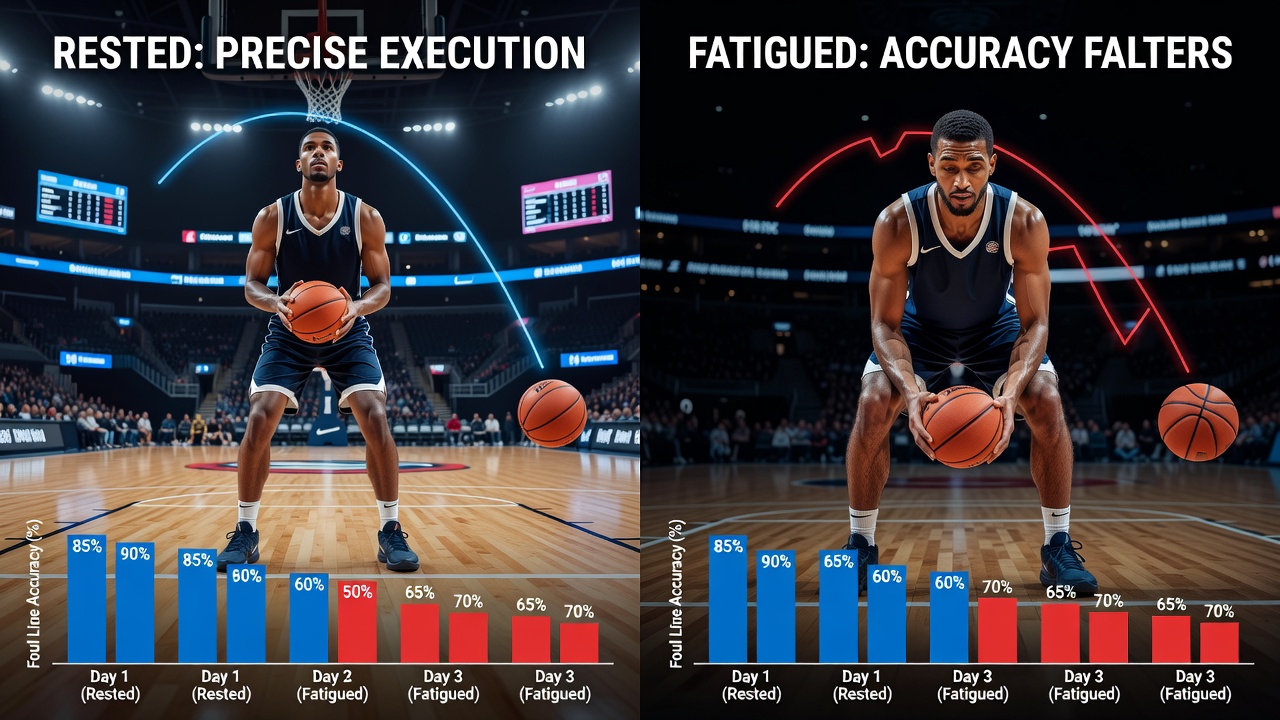
How Rest Patterns Shape Foul Line Accuracy During Conference Basketball Tournament Runs
Conference basketball tournaments pack multiple high-stakes games into tight windows, and rest intervals between contests directly influence free throw outcomes across those runs. Teams advance through quarterfinals, semifinals, and finals with schedules that often leave players varying amounts of recovery time, and data from recent seasons shows measurable differences in foul line percentages tied to those gaps. Researchers tracking Division I programs have documented how shorter rest periods correlate with dips in shooting efficiency, particularly when travel and physical demands compound the schedule.
Rest Windows and Physical Recovery Demands
Players who receive at least 48 hours between games maintain higher free throw percentages than those competing on consecutive days, according to performance tracking conducted by several Power conference athletic departments. Muscle glycogen replenishment slows under compressed timelines, and studies from sports science labs indicate that reduced recovery time impairs fine motor control required for consistent release mechanics at the line. When squads play back-to-back contests, leg fatigue builds quickly, and that fatigue translates into altered shooting arcs and follow-through stability during later tournament rounds.
Turnaround times shorten further during championship weekends, where some teams face elimination games with only overnight intervals separating them. Data compiled from Big East and Big 12 tournament logs reveals that squads averaging under 36 hours of rest posted free throw rates roughly 4 to 7 percentage points lower than those with extended breaks. These patterns hold across both men's and women's brackets, though the effect size appears slightly larger in men's tournaments where game pace tends to run higher.
Statistical Patterns Across Recent Seasons
Analysis of NCAA conference tournament box scores from 2022 through 2025 demonstrates clear trends linking rest duration to foul line results. Teams that enjoyed full rest days before semifinal and final matchups converted free throws at rates exceeding 78 percent in multiple cases, while those navigating shorter recovery windows hovered near 71 percent. Researchers at institutions including the University of Michigan's kinesiology program have published findings showing that defensive rebounding intensity in prior games predicts subsequent free throw variance more accurately when rest falls below 40 hours.
What's interesting is how these numbers shift during extended tournament runs that stretch into championship games. Observers note that squads reaching finals after three games in four days exhibit wider shot dispersion on free throws, and tracking data from SportVU systems confirms increased variability in release angles under those conditions. External factors such as arena lighting and crowd noise interact with fatigue, yet rest remains the dominant variable in the datasets examined.
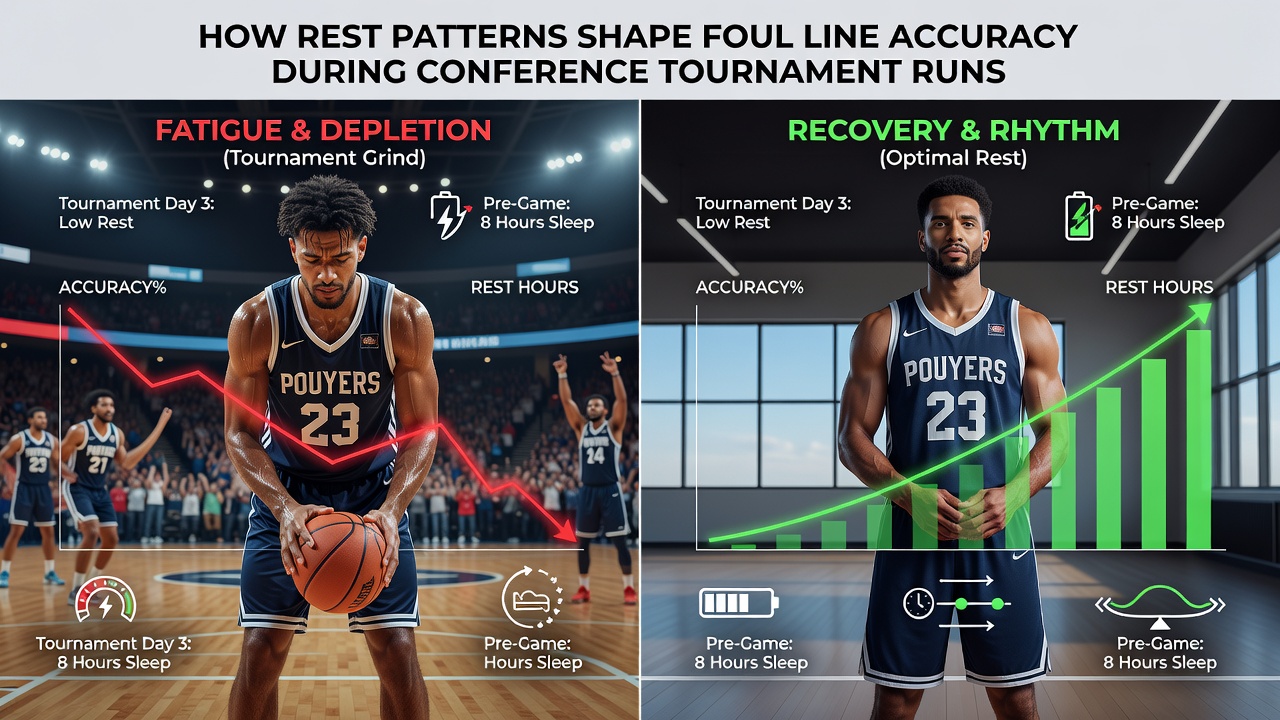
Case Examples From Conference Play
One Atlantic Coast Conference program advanced through its 2024 tournament bracket with an average 52-hour rest window between victories and finished the run converting 82 percent of free throws. In contrast, a Mid-American Conference team that competed on successive evenings during the same calendar window posted a 68 percent success rate at the line across its three games. Those who studied the footage observed that players in the shorter-rest scenario altered their shooting routines, taking additional dribbles and extending their pre-shot pauses as the tournament progressed.
Similar contrasts appear in West Coast Conference and Missouri Valley events, where geographic travel distances add another layer to recovery calculations. Teams crossing multiple time zones between early-round and semifinal games show amplified effects on foul shooting, and performance analysts have recorded drops of up to nine percentage points in those specific scenarios. Data from the NCAA's own injury surveillance program supports the observation that cumulative fatigue from abbreviated rest contributes to both accuracy declines and increased foul trouble among key rotation players.
Strategic Adjustments and Monitoring Tools
Coaching staffs increasingly deploy wearable recovery monitors and sleep tracking during tournament weeks to forecast free throw reliability. Programs that integrate heart rate variability readings into substitution patterns have recorded steadier foul line numbers in later rounds compared with teams relying solely on traditional rest protocols. Training sessions between games now emphasize lighter shooting drills focused on mechanics rather than volume, and these adjustments appear in box score trends from several 2025 conference events.
League offices continue to examine schedule construction, and discussions at the 2025 NCAA convention highlighted potential adjustments to tournament formats that could expand minimum rest requirements. Figures released by the National Association of Basketball Coaches indicate growing interest in data-driven scheduling that accounts for travel and recovery metrics alongside competitive balance.
Conclusion
Rest patterns exert a documented influence on foul line accuracy throughout conference basketball tournament runs, with statistical evidence linking shorter recovery windows to measurable declines in free throw conversion. Performance datasets, case studies from multiple conferences, and monitoring technologies all point to the same core relationship between available rest and shooting outcomes. As tournament formats evolve and data collection expands, these connections will likely shape both preparation strategies and scheduling decisions in coming seasons.