Elevation Impacts on Scoring Metrics and Totals Betting in High-Altitude Soccer Fixtures
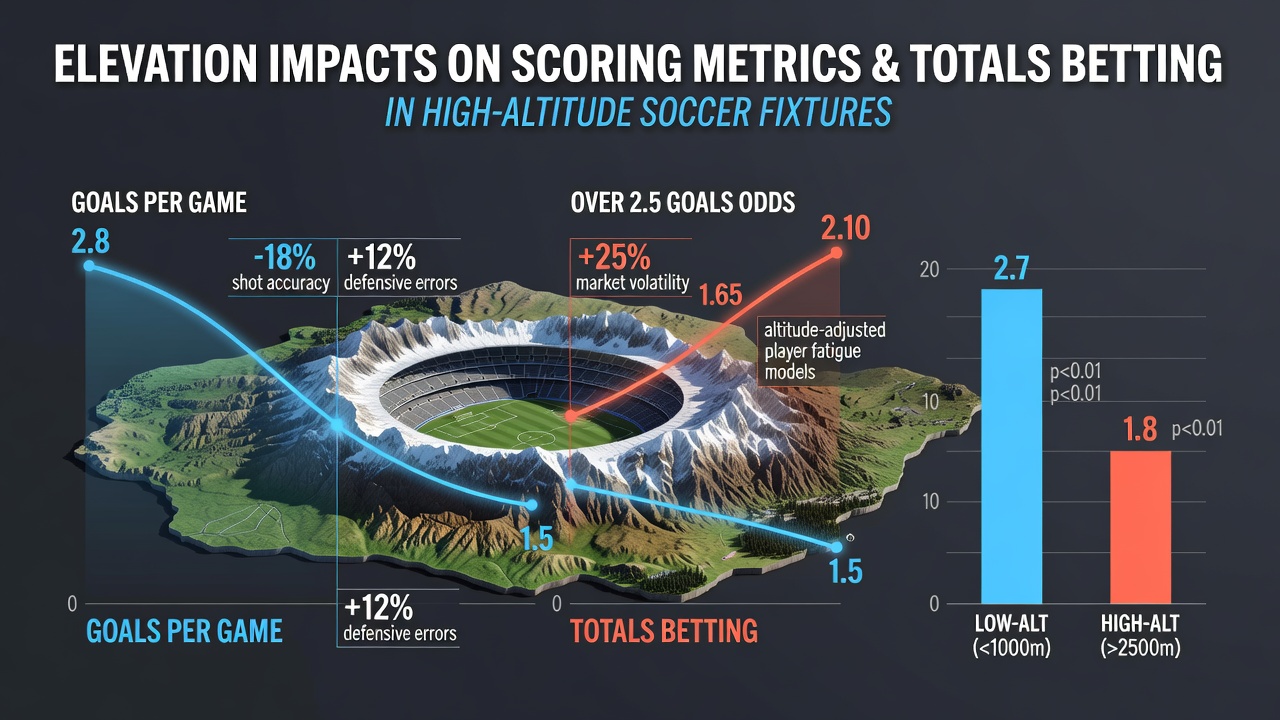
High-altitude venues create distinct conditions that reshape how soccer matches unfold, particularly when it comes to goal tallies and the betting markets built around them. Venues like La Paz, Quito, and Mexico City sit well above 2000 meters, where reduced oxygen levels and thinner air alter everything from player endurance to the way the ball moves through space.
Teams traveling from sea-level bases often face immediate challenges because their bodies require time to adjust, whereas home sides maintain an edge from constant exposure. Data from CONMEBOL competitions shows that matches at these elevations frequently produce scoring patterns different from those at lower altitudes, with totals markets reflecting those shifts over multiple seasons.
Physiological Demands at Altitude
Players experience quicker fatigue because oxygen uptake drops sharply once elevation exceeds 2500 meters, forcing more reliance on anaerobic systems during sprints and recoveries. Research from the Australian Institute of Sport highlights how visiting squads record higher heart rates and reduced high-intensity running distances in the second halves of such fixtures, while acclimatized players sustain output longer.
This fatigue dynamic influences defensive structures late in games, opening spaces that attacking units exploit when legs tire. Observers note that substitutions and tactical adjustments become critical tools for coaches managing these environments, especially during packed schedules that limit recovery windows between matches.
Ball Flight and Aerodynamics
Thinner air reduces drag on the ball, allowing it to travel farther and faster than at sea level, which changes set-piece trajectories and long-range shots. Studies from the University of British Columbia demonstrate that a standard strike from 25 meters can gain several extra meters of carry at 3600 meters, increasing the likelihood of goals from distance.
Goalkeepers adjust positioning accordingly, yet the unpredictability of swerve and dip remains pronounced. These physical factors combine with player conditioning to create environments where totals markets show measurable deviations from league-wide averages, particularly in over 2.5 goals lines during the opening 30 minutes when fresh legs still dominate.

Historical Scoring Trends Across Leagues
Records from Bolivia's Primera División and Mexico's Liga MX reveal that home teams at altitude post higher goal averages per game than their counterparts at lower elevations, though visiting sides sometimes counter with early pressure before stamina wanes. Figures compiled over the past decade indicate that matches in La Paz average 3.1 goals compared to 2.6 in coastal venues, with the gap widening in cup competitions that feature greater travel distances for away squads.
June 2026 brings additional attention to these dynamics as World Cup qualifiers intensify across South America, where several key fixtures will unfold at established high-altitude grounds. Teams preparing for those encounters often schedule acclimatization camps weeks in advance, a strategy that has produced measurable improvements in scoring resilience according to performance tracking data.
Betting Market Adjustments
Totals lines for high-altitude matches typically open higher than standard fixtures because bookmakers incorporate historical goal rates and environmental variables into their models. Sharp bettors track patterns such as first-half overperformance and second-half variance, where fatigue can either inflate or suppress scoring depending on squad depth.
Live betting opportunities emerge as matches progress because real-time adjustments account for visible signs of exhaustion among non-acclimatized players. Data from regional analytics providers shows that over 3.5 goals lines hit more frequently in the final 15 minutes at venues above 3000 meters, reflecting the cumulative effect of reduced recovery capacity.
Case Examples from Recent Campaigns
Matches involving Bolívar at Estadio Hernando Siles have consistently generated elevated goal counts when facing sides arriving directly from lower elevations without prior adaptation periods. Similar trends appear in Ecuadorian venues around Quito, where set-piece success rates climb because defenders struggle to maintain marking structures amid faster ball movement.
Coaches who rotate squads aggressively before these trips often preserve energy for the later stages, producing tighter contests that push totals markets toward the under side. Those patterns become especially relevant during midweek continental ties when travel logistics compound the altitude stress.
Conclusion
Elevation continues to shape scoring metrics in predictable yet nuanced ways that directly influence totals betting outcomes across high-altitude soccer fixtures. Teams, analysts, and market makers all account for these environmental variables when preparing for matches at venues like those in Bolivia, Ecuador, and Mexico, where data accumulated over multiple seasons guides expectations and line movements. As international calendars advance toward June 2026, the interplay between altitude, player conditioning, and goal production will remain a central factor in how these contests resolve.