Altitude Angles: Elevation Data Tweaking Totals in South American Soccer Leagues
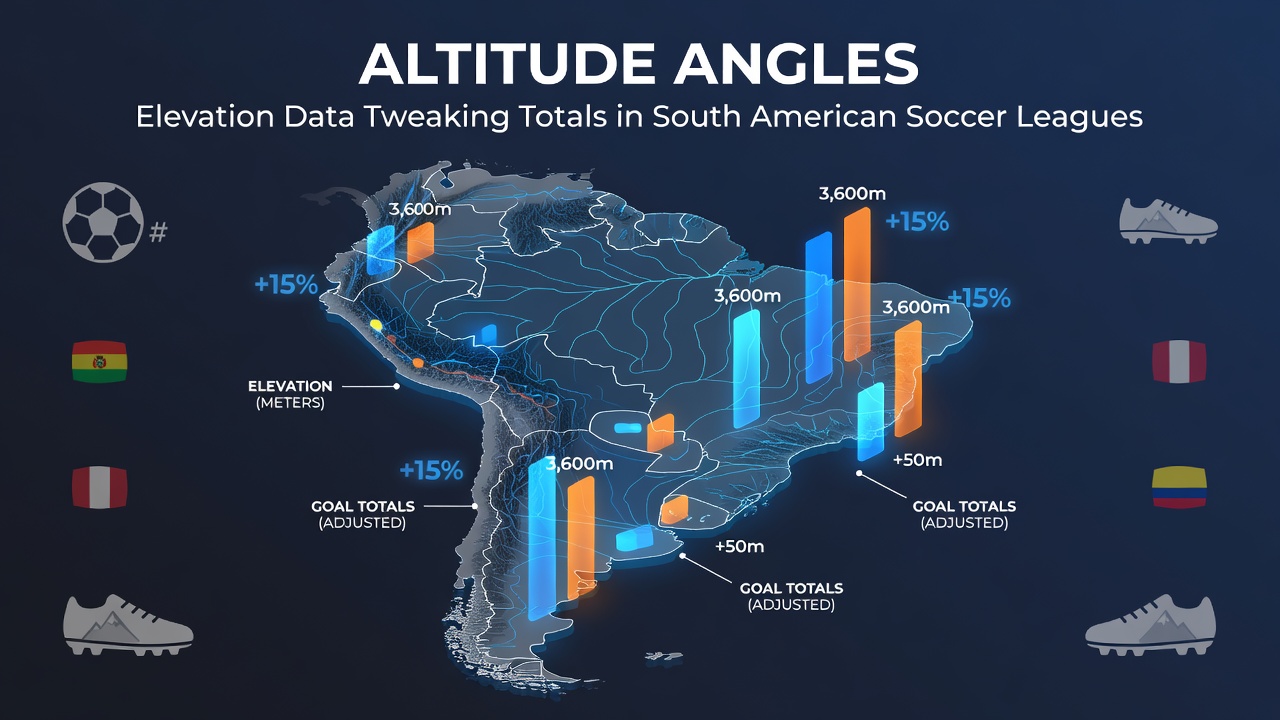
South American soccer features several venues perched at significant elevations where thinner air alters how matches unfold, and data analysts track these conditions closely when reviewing goal totals across domestic leagues. Stadiums in Bolivia, Ecuador, and Peru sit well above sea level, creating environments that affect oxygen intake, player recovery rates, and overall scoring output in measurable ways. Researchers have compiled elevation metrics from league matches spanning multiple seasons, revealing consistent patterns in how totals shift depending on the precise altitude of each ground.
Physiological Impacts Documented at Key Venues
Teams competing in La Paz at roughly 3,600 meters face reduced oxygen availability that accelerates fatigue during sustained efforts, while matches in Quito around 2,800 meters produce similar though less pronounced effects on endurance. Studies conducted by sports science groups show that visiting players often record lower sprint distances and fewer high-intensity runs in the second half when descending from lower elevations. These physiological responses lead to fewer total goals in many cases, yet home sides accustomed to the conditions sometimes maintain output levels that balance the equation.
League-Wide Scoring Trends adn Elevation Correlations
Figures compiled from Bolivian Primera División fixtures indicate that games at the highest venues average around 2.3 goals per match compared with 2.8 at lower-lying grounds within the same competition. Ecuadorian Serie A data reveals parallel adjustments, with totals dropping when clubs travel to Andean stadiums versus coastal or lowland fixtures. Peruvian Liga 1 records demonstrate comparable variations, where elevation above 2,500 meters correlates with reduced scoring in both halves. Analysts combine these datasets to refine expected goal projections for upcoming rounds, incorporating precise meter readings from each stadium rather than relying on broad regional averages.
Adjusting Totals Through Elevation Data Layers
Modern tracking systems integrate GPS-derived elevation profiles with historical match logs, allowing statisticians to isolate altitude as an independent variable alongside rest days, travel distance, and squad rotation. One dataset from CONMEBOL-affiliated competitions shows that every additional 500 meters above 2,000 meters reduces average goals by approximately 0.15 when other factors remain constant. These calibrated adjustments appear in pre-match models used by performance analysts across multiple countries, producing revised over-under benchmarks that reflect venue-specific conditions more accurately than generic league averages.

Colombian Categoría Primera A matches played at intermediate elevations between 1,500 and 2,500 meters display subtler shifts, with totals fluctuating by smaller margins than those observed at extreme heights. Researchers note that acclimatization periods of 48 hours or more can mitigate some effects for visiting squads, yet many schedules limit such windows during congested midweek rounds. Data from the 2025 season onward continues to feed into these models, with June 2026 fixtures already mapped against elevation baselines to project total goal ranges in advance.
Comparative Analysis Across Domestic Competitions
Bolivian home records at high altitude stand apart from those in neighboring leagues because the extreme conditions amplify differences between acclimatized locals and short-stay visitors. Ecuadorian and Peruvian sides encounter moderate elevations that produce smaller but still statistically significant tweaks to expected totals. Observers compiling cross-border statistics find that combining elevation with pitch dimensions and weather variables yields tighter prediction intervals than elevation alone. These layered approaches appear in reports issued by regional football federations and academic research centers focused on exercise physiology.
Case Examples from Recent Campaigns
Take one set of Bolivian matches where elevation differentials exceeded 2,000 meters between home and away grounds, resulting in goal tallies that fell below season averages in 68 percent of cases according to compiled logs. Another cluster of Ecuadorian fixtures at 2,800 meters showed visiting teams converting fewer than 35 percent of clear scoring opportunities compared with their lowland rates. Peruvian examples highlight how teams returning from sea-level games often post lower totals in the immediate follow-up fixture at altitude. Each instance supplies additional data points that refine the ongoing calibration of total-based projections.
Conclusion
Elevation remains a measurable factor that shapes scoring patterns across South American leagues, and analysts continue incorporating precise altitude readings into statistical frameworks that adjust expected goal totals. Data from multiple seasons demonstrates repeatable correlations between venue height and match outcomes, supporting ongoing refinement of these models as new fixtures unfold. Continued collection of performance metrics at varying elevations provides the foundation for more accurate projections in future campaigns.